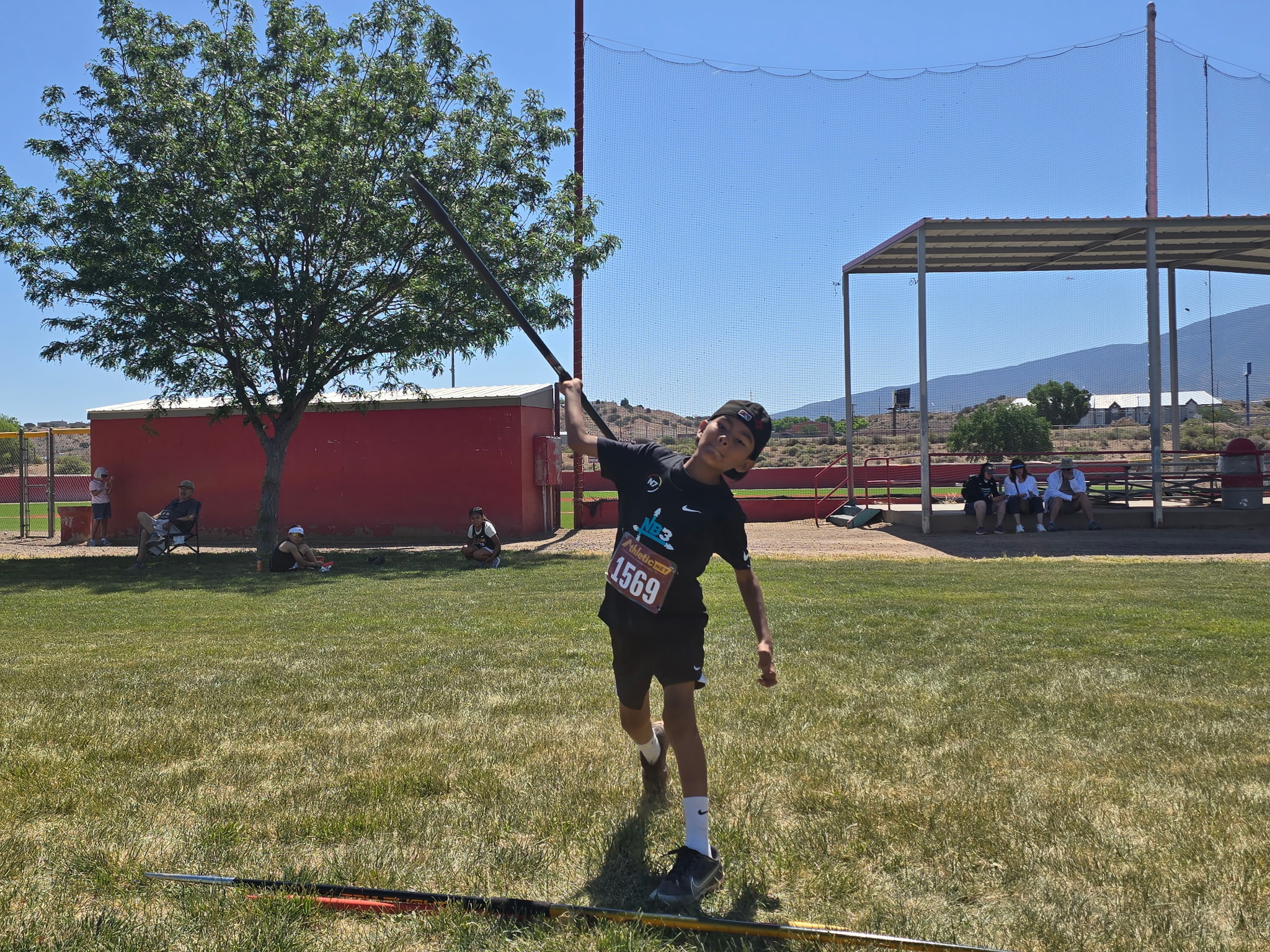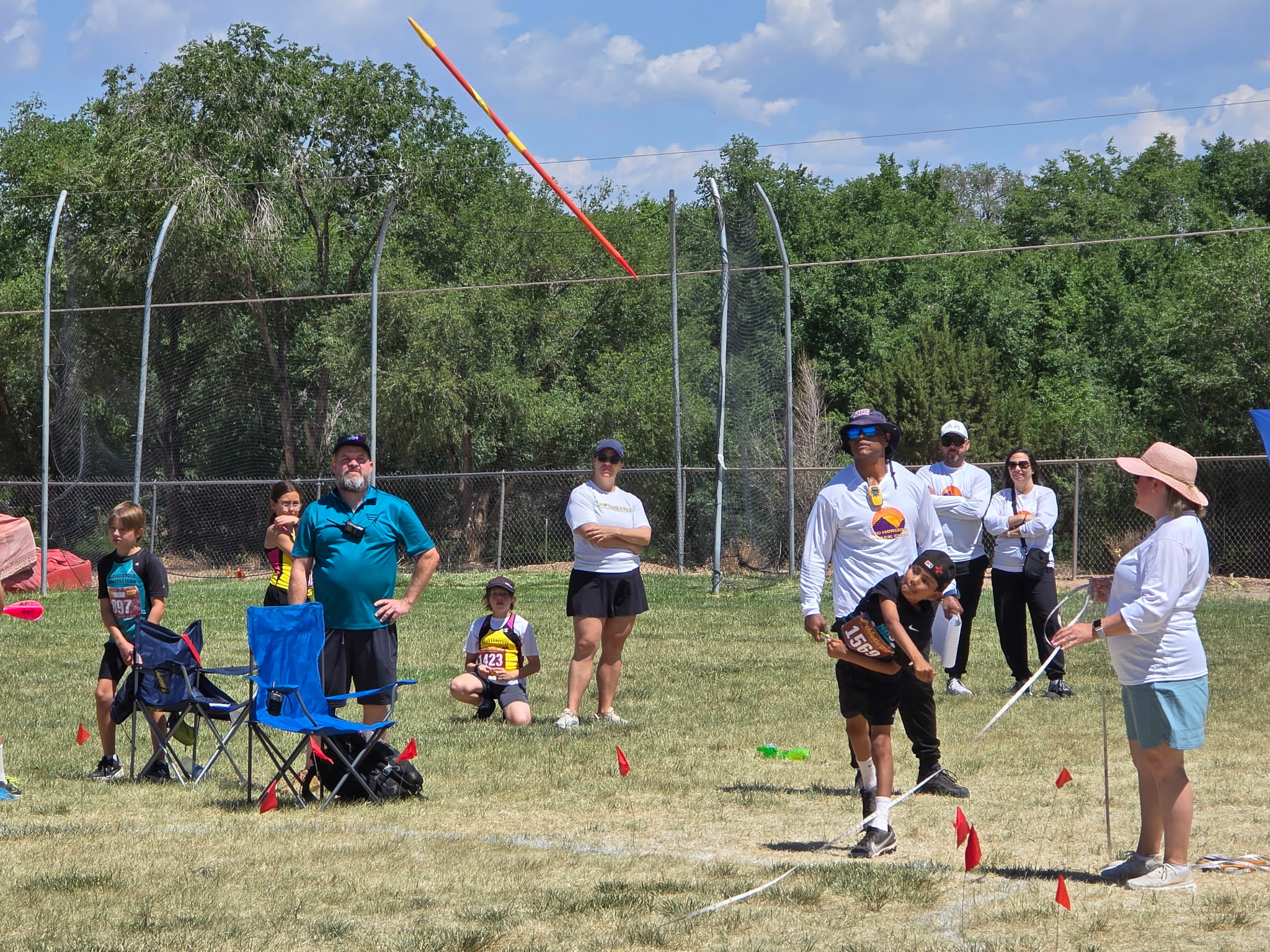
NB3FIT Track & Field athlete Lorenzo Leon, 14, of the Pueblo of Acoma, is finding success both on the track and in the classroom, where his curiosity sparked an interest in beekeeping. While competing this season in the 800-meter run, 1,500-meter run, javelin and long jump, Lorenzo also completed a beekeeping project for his eighth-grade class at the Native American Community Academy (NACA).

Lorenzo’s interest in bees began when his grandmother started taking a beekeeping class and prepared to bring bees home. He and his grandfather helped build a protective enclosure for the hive, and Lorenzo soon had the opportunity to learn more through visits to the Pueblo of Laguna apiary, which is home to more than 10 hives.

Through his research, Lorenzo learned about the important roles queen bees, worker bees and drones play within a hive. He also participated in hive inspections, helping examine frames for honey, pollen and developing bees while learning how colonies work together to thrive.

As part of his project, Lorenzo interviewed local beekeepers and discovered the important role bees play in pollinating crops and supporting healthy ecosystems. He also learned lessons that extend beyond the hive, including teamwork, patience and cooperation.

“We can learn from the bees by watching them work together to keep the hive alive and growing,” Lorenzo shared in his project.

NB3 Foundation is proud to celebrate youth like Lorenzo who pursue their interests beyond sports, embrace learning opportunities and strengthen their connections to community.

To learn more about New Mexico honey bees, visit the New Mexico State University bee program website.

Read Lorenzo’s full report below!


Learning about Beekeeping
by Lorenzo Leon

I got interested in bees because my grandma was taking a class in beekeeping. She was getting ready to bring bees home, so my grandpa and I helped make her a “bee corral.” We did this because the range horses roam around where we live, and the wind blows hard sometimes. Later, I had the chance to go to the Pueblo of Laguna apiary, where they now have more than 10 hives.

A beehive has bees that perform different jobs.

The queen bee is the most important bee in the hive. Her job is to keep the bees together and lay eggs throughout her life.

Worker bees make up most of the bees in the hive. They are all females and have many jobs, including:

  • Keeping the hive clean
  • Maintaining the hive’s temperature
  • Taking care of the queen
  • Caring for eggs and larvae
  • Guarding the hive
  • Collecting nectar and pollen

During the summer, worker bees are very busy and may live about six weeks. During cooler weather, they are less busy and can live about six months.

Drones are the male bees. There are usually fewer of them. Their job is to mate with a queen bee, usually one from another hive. I learned that worker bees can push drones out of the hive because they do not help with anything else in the hive.

I learned how to help with hive inspections. We wear protective veils and suits over our faces and bodies, but I have still gotten a few bee stings. When the hive is opened, a smoker with cool smoke helps move the bees around.

We have a Langstroth hive with 10 frames. We take out each frame to see what is going on in the hive. We look to see how much nectar and pollen are stored. We look for new bees. Eggs are hard to see, so we look for larvae and new adults forming in covered honeycomb cells. We also look for the queen. She is bigger and longer than the worker bees. Sometimes she is hard to find, and it is exciting when we see her.

I interviewed two Laguna beekeepers for my project, and here are some important things to remember and think about.

Bees are important to agriculture because they help pollinate crops.

We can learn from bees by watching them work together to keep the hive alive and growing. We learn that we need to work slowly and calmly when working with bees and pay attention to what we are doing. We benefit from the gifts of bees, including honey and wax. We also need to be aware that using chemicals, such as pesticides, on plants is harmful and often deadly to bees.

I am glad I am learning about bees and have the opportunity to work with them.


We’re proud to introduce the new and returning members of our 2025-2026 NB3 Foundation Youth Council!  

Now in its third year, the NB3 Foundation Youth Council continues to grow as a platform for young leaders. We’re excited to welcome new and returning members of the 2025-2026 Youth Council, a dedicated group of youth committed to stepping up, speaking out, and leading change in their communities.

This year, the council will continue to focus on youth development, community advocacy and taking on active leadership roles within the council itself. As part of their year-long commitment, youth council members will complete service hours by planning and participating in community-based projects within their schools and communities. These service hours will provide our youth hands-on opportunities to give back to the community, while also growing social connections, enhancing soft skills (e.g., perseverance, responsibility, teamwork), and gaining exposure to potential career paths. 

As affiliates of UNITY, Inc., our members benefit from a national and local network of affiliate youth councils, whose resources and support have helped strengthen their leadership journeys to amplify their voices. 

We look forward to seeing the council grow, inspire and lead with purpose!

2025-2026 NB3 Foundation Youth Council Members 

Desinayah Pacheco – Pueblo of Kewa

Quinton Begay –  Pueblos of Jemez, San Felipe, Isleta and Diné

Antone Quiver – San Felipe Pueblo  

Abby Mariano – Acoma and Laguna Pueblos 

Gionni Quiver – San Felipe Pueblo 

JayLana Sanders – Santa Ana Pueblo 

Ezekial Bird – Pueblo of Kewa and Hopi 

Corey Bird – Pueblo of Kewa  and Hopi 

Pharrah Clark – Diné and Laguna Pueblo 

Hannah Naljahih – Diné and Kiowa 

Leandra Jynell Baca – Santa Clara Pueblo 

Harley Martin – Diné 

WynterRose Sheka – Diné, Zuni Pueblo and Ho-Chunk 

Summerlyn McReeves – Diné

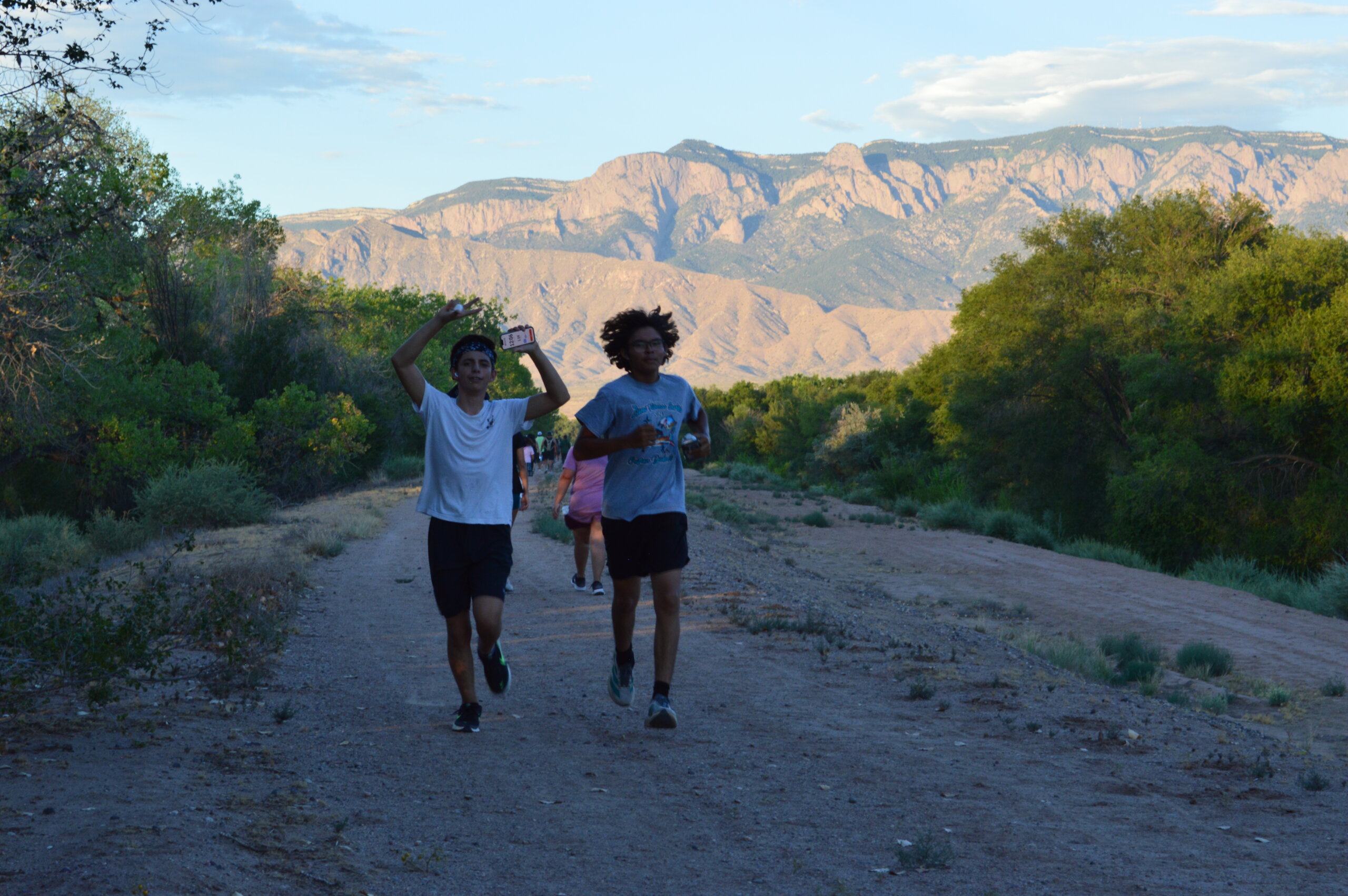
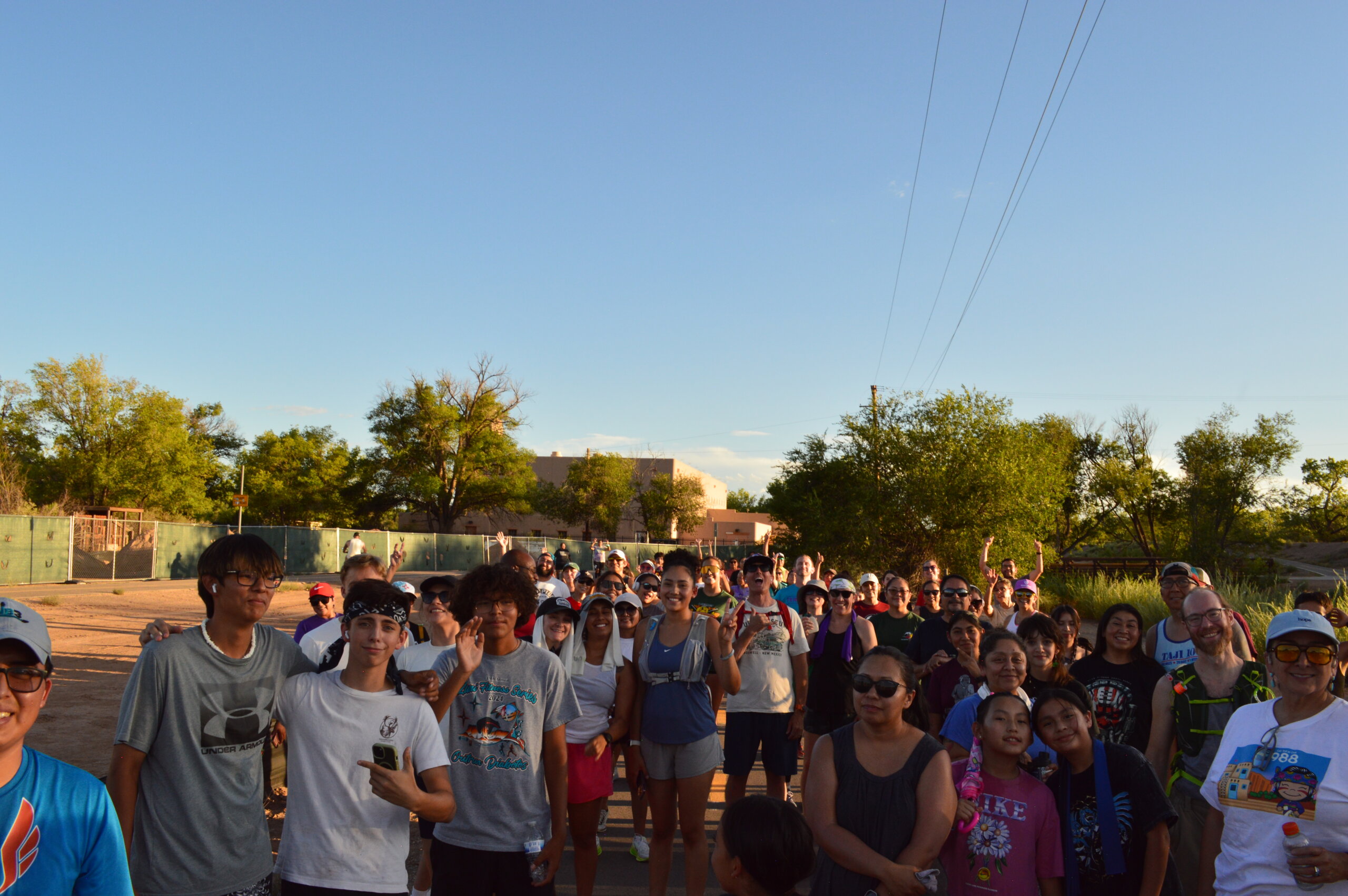
Members and advisors of the NB3 Foundation Youth Council joined forces to host one of this year’s Twilight Series fun runs and walks, in partnership with Running Medicine, Native Health Initiative and the Dukes Track Club.

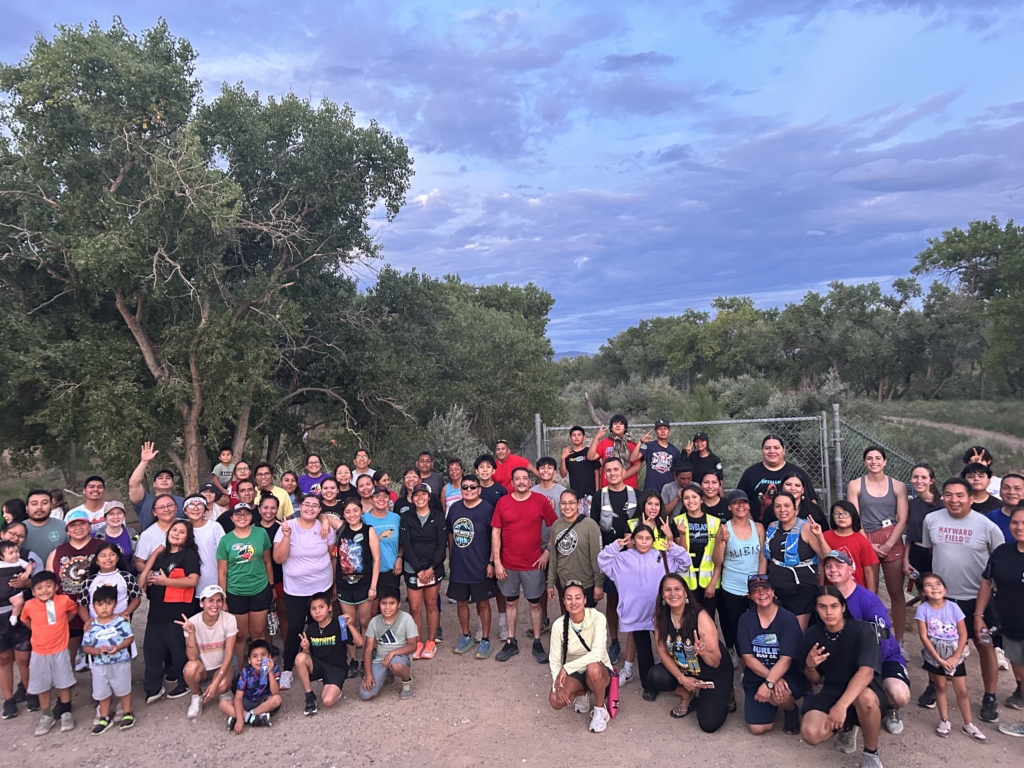
The Albuquerque event drew more than 115 participants, who ran or walked distances ranging from 1 to 3 miles. Community members from Albuquerque, San Felipe Pueblo and Santo Domingo Pueblo joined in, along with members of the Kewa TRUTH and Katishtya youth councils and their families.

The event held special significance for youth council member Ezekial Bird (Santo Domingo/Hopi), who designed the run/walk as part of his community project for the Summer Policy Academy. The academy educates Indigenous youth on federal policies affecting tribal nations and encourages participants to address issues related to language, environment, health and education through youth-led projects.

Council members also took leadership roles during the event, from marking routes and flagging runners to leading warm-ups, taking photos and distributing raffle prizes. The teamwork and energy underscored the council’s growing role in promoting community health and connection.

The youth council plans to continue making the run/walk a highlight of its annual calendar, strengthening partnerships with other youth councils and providing new opportunities for young leaders to step forward.

To learn more about upcoming NB3 Foundation Youth Council activities and community projects, follow NB3 Foundation on social media.

San Diego | June 29–July 3, 2025

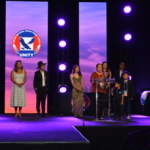
Seven members of the NB3 Foundation Youth Council traveled to San Diego to participate in the 2025 United National Indian Tribal Youth (UNITY) National Conference, joining more than 2,500 Native youth from across the country. This year’s theme, “Voices of H.O.P.E.” — standing for heartfelt conversations, open dialogue, promoting resources and encouraging change provided a powerful framework for a week grounded in connection, culture and community.

Over five days, the Youth Council took part in workshops, leadership sessions and cultural exchanges focused on spiritual, mental, physical and social well-being. They engaged in peer discussions around the challenges facing Native youth, explored strategies for creating positive change and built lasting relationships with youth leaders from dozens of tribal nations.

NB3 Foundation Youth Council members were active and visible throughout the conference. They participated in the UNITY fashion show, proudly walking the runway in both traditional and contemporary Native designs. They also won the 3-on-3 basketball tournament held at San Diego State University. During the UNITY business meeting, council members spoke on issues affecting their communities and affirmed their commitment to youth leadership.

In addition to leadership and wellness sessions, the youth participated in cultural ceremonies, including the lighting of the UNITY Fire and opening of the UNITY Drum. They attended breakout workshops on language revitalization, youth organizing, wellness practices and community engagement. These experiences not only strengthened their knowledge and confidence but also deepened their commitment to service.

Youth Council advisors also attended a dedicated development track led by Dr. Pearl Yellowman. Sessions focused on building team trust, ensuring safe and inclusive programming, and incorporating cultural memory and healing into youth work. Advisors explored strategies for fundraising, service project design and sustaining long-term impact.

“Attending the UNITY conference inspired me with the powerful message that embracing diversity and inclusion in all aspects of life not only enriches our communities but also drives innovation and positive change,” Antone Quiver said. 

“UNITY is really a movement for a brighter future for Indigenous communities across the states, and the number of tribes and people who attended proves how far it’s come,” Corey Bird said. 

“What inspired me at UNITY is seeing all of the different tribal youth councils and hearing about how hard they’re working for their community,”  Ezekial Bird added. 

Following the conference, the Youth Council returned home with renewed energy and a clear vision for the year ahead. With new connections, expanded knowledge and a deeper sense of purpose, they are ready to continue uplifting Native youth and building healthier communities.

The NB3 Foundation is proud to support and invest in these emerging leaders. Their experience at UNITY reflects the impact of culturally grounded, youth-led programming, and what can happen when Native youth are empowered to lead.

This month in support of youth cultural connections, we are featuring a member of our NB3 Foundation youth council, WynterRose Sheka of Tohatchi, New Mexico. She is Diné/Zuni/Ho-Chunk and recently graduated with her high school diploma and associate’s degree. Her post-high school plans include continuing her education and playing basketball at the college level. 

A dedicated and compassionate student-athlete, WynterRose is an active participant in powwows. Family support has been a huge part of her involvement. When asked about how powwow has shaped her into the person she is today, she says, “Powwow has taught me respect for myself and others, listening skills, and how to be independent and stay healthy.” When asked what drives her to continue taking part, she says, “What drives me is expressing myself and feeling positive energy. Powwow helps me live a balanced life.” 

With the support of family and friends, WynterRose recently danced Fancy Shawl at a powwow held at Newcomb High School. This event stood out to her because of the togetherness and involvement of community members, especially local youth. About the event she says, “I had a good time dancing with my fellow fancy shawlers. The songs were very good, and the vibes were great! Seeing the students be involved brought me so much joy.” 

Thinking back on her journey with powwow, WynterRose recalls how her father and relatives first introduced her to dancing at powwows. She also recognizes her mother’s role as pivotal in helping her prepare to dance, especially in her early stages. Now, she is at the point where she can get herself ready, and that is one example of the empowerment she has received through family and powwow.  

Her involvement has also brought a sense of pride for WynterRose. Looking ahead 5-10 years from now, she expects she will still feel proud because of how powwow connects her to culture and learning from elders. She says it has allowed her to be a part of something meaningful: “Being involved with powwow as a youth—whether through dancing, assisting with events, or just showing up—has meant I was helping to honor my community.” 

When asked what advice she would offer to fellow youth looking to connect with culture through powwow, she says, “Be yourself. Find a trusted mentor, ask questions, and be open to learning. Never be afraid to try something new!”  

We are thankful for WynterRose for her interest in joining our youth council and her willingness to be featured in this month’s newsletter. Established in 2023, the NB3 Foundation Youth Council focuses on building youth leadership and empowering Native youth to drive health initiatives in their communities. Youth council members build skills through youth leadership development opportunities, collaborations, and mentorship. To receive updates about the youth council follow us on Facebook and Instagram. 


For many Native youth, sports offer more than just competition they offer connection, opportunity, and the chance to rewrite the narrative. Members of the NB3FIT Youth Golf Team, including Alyssandra Rodriguez and Zachary BlueEyes, are doing just that, showcasing what’s possible when talent meets community support and national opportunity.

Through the NB3 Foundation and the NB3FIT Golf program, these young golfers have grown not only as players but also as leaders. Zachary BlueEyes reflects on the program’s impact: “NB3FIT Golf Team has had a huge impact on me. I’ve become mentally stronger, more disciplined, and I’ve learned how to carry myself both on and off the course. It’s helped me grow not just as a golfer, but as a leader and role model in my community.”

Golf has brought BlueEyes many experiences and in a PGA Pathway to Progression event, the Amundi Evian Junior Showcase is one he will always remember.

“It challenged me to train harder and trust the process, even when it felt slow,” he said. “Being surrounded by talented players made me realize the importance of supporting each other and helping others get their names out there. It reminded me that the journey is about more than just individual success it’s also about building a community and giving back.”

Thanks to these opportunities, BlueEyes is now looking ahead to new challenges. He is headed to the New Mexico Military Institute (NMMI) to compete at the collegiate level, with plans to transfer to New Mexico State University (NMSU) and pursue a degree in Professional Golf Management.

“My goal is to either earn a spot on the NMSU golf team or continue building a career in the golf industry. I’m committed to making the most of every opportunity.”

Off the course, BlueEyes remains focused on his education.  “I want to study business and marketing to give myself a range of options. Education is key, and ultimately, I want to give back to the communities that raised and supported me.”

When asked what advice he’d give to other Native youth, BlueEyes said, “Stay focused on your journey. Golf can be uncomfortable sometimes, but that’s where growth happens,” he said. “Don’t waste time comparing yourself to others or worrying about what other people are shooting. Stay focused on your progress, your grind, and what you’re capable of achieving. Most importantly, be proud of where you come from. Representing your Native community through golf is powerful.”

Their journeys speak to a larger movement one where Native and minority athletes are reshaping the face of golf.

“The growing visibility of Native and minority players in golf is a powerful reminder that we can make an impact on any field, regardless of the barriers we may face. As more of us step onto the course and showcase our skills, we’re breaking down stereotypes and showing the world that we belong,” BlueEyes emphasized.

As partnerships like the one between the NB3 Foundation and the PGA continue to grow, so do the opportunities for Native youth. The stories of Zachary and Alyssandra are just a few of many, but they send a powerful message to our youth and communities.

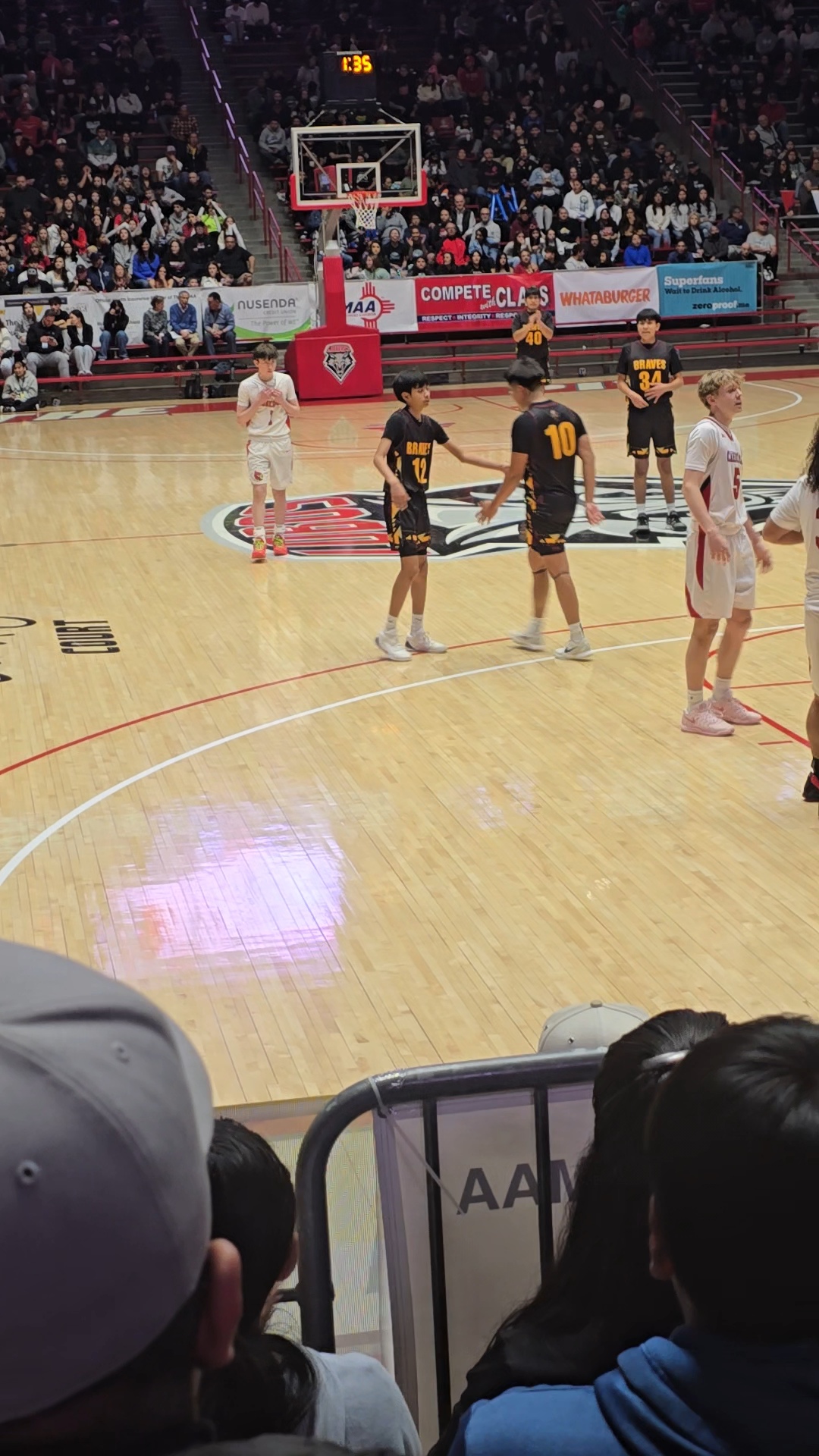
Join us in recognizing two members of the NB3 Foundation Youth Council: WynterRose Sheka (#22, Tohatchi High School Senior) and Marcus Tenorio (#12, Santa Fe Indian School Freshman)!

These two athletes are not only standouts on the court, but also passionate mentors and advocates off the court. As youth council members, they show up for their communities, lead by example, and uplift their peers by promoting healthy futures for Native youth.

Their advice to younger athletes:
“To the young ones out there — keep pushing towards your goals. Even if it’s a small milestone, it’s still a step towards your bigger goals. You got this!”

— Marcus

“In any sport, you need to have the IQ — understand the game. Be in the gym every day whether it’s running, shooting, or ball handling. Eat healthy and take care of yourself. Self-care matters as you grow. And always express your feelings to your parents or a trusted family member.”
— WynterRose (2025 First Team All-District Selection & District Co-MVP, 3A All State, NM All Star)

Youth are the bringers of hope and inspiration in all our communities. Today we are sharing the story of, April Moquino, a young lady who is pursuing her goals while making positive change in her community.

April is a high school senior who is often described as, “wise beyond her years.” She wouldn’t say that about herself, but just speaking with her you understand why people say that. She is a dedicated student-athlete, member of the National Honor Society but above all, she is a proud Pueblo woman. April is very connected to her Pueblo identity and grounds everything she does in her values and beliefs.

Making an impact on youth

This past year, April completed a project with fellow classmate Makayla Suina, Pueblo of Cochiti. Together they organized a book drive for elementary students in Cochiti and Santa Domingo Pueblos as part of a community service requirement for National Honor Society.

“Community service through the school setting and through the Western view of what community service is, is so different from the Pueblo version of it,” she said. “Yes, I needed the credit, but I wanted it to be something meaningful and not just sending money to an organization … I wanted to do something that would benefit my community.”

Due to the pandemic, the book drive was done almost all virtually. People from all over the country donated books from a list the girls put together specifically geared towards children of color. In June 2021, April and Michaela went to the local community centers to deliver the books to the students.

“Honestly, seeing the smiles from the kids getting something new and different after the whole school year when no one was getting together… It was really heartwarming,” she said.

Sustaining the lands  

April says her passion is in environmental justice, specifically through an Indigenous lens. She credits her growth in interest to an internship she has participated in with High Water Mark LLC, a Native-woman owned environmental consulting company based in Bernalillo, NM. During her two years at High Water Mark LLC, she worked on a project with fellow youth interns to bring up concerns against turning Bandelier National Monument into a national park. Which she said would put the surrounding environment, resources and ancestral Pueblo homelands at risk.

April remains invested in the outcome of this project. She says her interest and concerns all come back to the traditional mindset she carries as Pueblo person, which is very conservative when it comes to the land and resources.

“[The youth] are the next generation to care for the lands,” she said. “It is so important to know about the ancestral homelands and what belongs there, what the water resources are, the food resources and the medicine. I don’t think I would’ve fully understood that had I not known Keres as my first language.”

‘It all ties back into the language and who we are as a people’

Keres was April’s first language she spoke as a child and is at the center of all she does. Right now, it is at the forefront of a current barrier she is working to overcome in school. Keres is currently offered as a language course at her high school; however, it does not hold the same rank as other language classes. By taking Keres instead of an honor’s foreign language, April is hindering her class rank. Something that is very important when applying for elite colleges around the country.

“The rank was my first thought; I have to admit. I was hurt and disappointed about that, but there’s something I can still do about it,” she said.

This year, April’s goal is to get her high school to recognize Keres as an honors-level course. She plans to first work with her community and tribal officials before approaching the school board to see if it’s a possibility. She remains hopeful to make the change for future Pueblo students.

“Even if it doesn’t affect me this year, it will be beneficial for kids in the years to come,” she said. “We as Native students shouldn’t have to put our language on the back-burner just so we can get rank status.”

Looking ahead

April is focusing her efforts on getting accepted and attending Stanford University next fall. Her mother attended Stanford, and says she is familiar with the campus and likes what they have to offer in the environmental spectrum. April also has plans on pursuing Indigenous Law here in New Mexico.

“I’m surrounded by a strong Native community and I feel like I can learn a lot,” she said. “My goal learning wise is not just education from the Western world, but to also have that home education, which is another reason I would want to go to law school here.”

April’s mother is Trisha Moquino, from the Pueblos of Ohkay Owingeh, Cochiti and Kewa. She is the co-founder and education director of Keres Children’s Learning Center in Cochiti Pueblo. April’s father is Mario Moquino from Kewa Pueblo a Navy veteran and Heavy Equipment Operator.


On Monday, July 12 Koi Zunie signed his letter of intent to play collegiate golf for Bacone College in Muskogee, Okla. The signing took place at the Santa Ana Golf Club, where Koi says his true golf career started last year at the Notah Begay III (NB3) Foundation’s Native Youth Golf Championship.

Koi grew up playing an array  of sports, and has always held a special interest in golf from watching his dad and grandpa. From his home in Zuni, N.M. Koi had little access to anything golf related. The nearest golf course was in Gallup, a 45-minute drive, and there was no local youth golf program for Koi to join. After his elementary years, Koi started to gravitate towards other sports that were more accessible, like football.

However, after years of only playing leisurely, Koi wanted to give golf a try again. Only one thing was holding him back from competing, his high school didn’t have a golf team. Koi and his father pitched the idea of starting one to the school board and it eventually was approved. Koi was given the greenlight to compete his junior year as the first-ever golfer from Zuni High School.

Unfortunately, days before Koi was set to compete in his first tournament the pandemic hit. All schools and sports were canceled for the remainder of the year. On the upside of things, golf courses were one of the first things to open back up after the shutdown.

“COVID shut everything down, but luckily we still had this outlet of golf,” Koi’s father, Kevin Zunie said.

Feeling unsure about what was to come, Koi came across the advertisement for the NB3 Foundation’s Inaugural Native Youth Golf Champion slated for August 2020. He knew he wanted to play. He saw it as an opportunity to get experience, and to see where he was amongst fellow Native youth his age.

“After the first round, we saw where I was at and I was seeded better than I thought,” he said.

Seeing where he was and how he finished overall gave Koi a boost of encouragement. He recalled being in awe of the Santa Ana Golf Club and all the nice equipment he seen fellow golfers have.

“I had golf clubs in my bag that were older than I am,” Zunie said. ”My grips were sliding down my hand.”

Regardless of his equipment, Koi was still holding his own and staying competitive in his division. Something he and his dad were proud of in the end.

After the tournament and receiving news his senior season of football was canceled, Koi decided to focus all his efforts on preparing for the spring golf season.

Koi and his dad hit the road, traveling to Grants to get some valuable practice in and finding golf tournaments to compete in. In his first  and only season as a high school golfer, Koi went on to win first place in the Grants High School Tournament, finish with All-district honors and qualify to play in the New Mexico High School State Tournament. He ended up finishing in the top 10 at state, a feat he wouldn’t have imagined just a year ago.

“The little things pay off,” Koi said. “I was practicing with one piece of turf, a holey net and a tire as my target. It may not be luxury practice tools for golf, but that’s how I did it.”

NB3 Foundation Director of NB3FIT, Clint Begay kept up with Koi throughout his season and began noticing his scores getting better and better. Knowing Koi was a senior, Begay reached out to Britanie Wacoche, the head golf coach at Bacone College and let her know about Koi. Wacoche liked what she saw in Koi and asked him to join the program.

“We’re happy to have Koi, this is a great opportunity to not only get a higher education but to have fun playing golf while doing it,” Wachoche said.

Begay was on-site for the signing representing the NB3 Foundation.

“At the NB3 Foundation we try to help Native youth as much as we can. Golf has been a great sport to my family and the foundation, so we just try to give back,” Begay said. “I helped Koi with words of encouragement and some equipment, but he put in the work. He put in the time.”

Koi’s starts at Bacone College next month, and looks forward to seeing where golf  and school will take him.

“Thank you to my parents for believing in what I wanted to do. My extended family, people who believed in me is what I really keep close. Thank you to Clint, the NB3 Foundation,  Zuni High School and Bacone for giving me a shot. We’ll see where it goes from here.”

After college Koi says he hopes to come home to help introduce golf to the youth at a young age.


Darin Espinoza, 13, Sigcangu Lakota
Darin is a determined, independent young man who doesn’t shy away from pursuing what he’s passionate about.
Last year, Darin started his own business, Darin’s Delights , selling baked goods and catering events on the Rosebud Reservation in South Dakota. Darin got started selling his treats at the local farmer’s market,  the Sicangu Harvest Market. Based in Mission, S.D.  and operated by the Sicangu Food Sovereignty Initiative, the market offers fresh, local produce from the Food Sovereignty Initiative’s Three Sisters Farm, as well as local meat, vegetables, bread, eggs, baked goods, Indigenous ingredients and homemade art & jewelry.
Darin is the youngest vendor at the market and is known for being an adventurous baker, focused on using local and healthy ingredients whenever possible.
“He is a self-motivated,” his mother Evelyn Espinoza said. “If he has an idea he goes for it!”
Darin is one of seven children and has a lot of responsibilities, his mother said. He is very self-motivated, tackling his homeschool curriculum, managing his business orders and participating in traditional life ways.
He is currently working on another endeavor in addition to his baking called, Darin’s Designs, which will feature earrings and accessories he designs and makes on his Cricut Crafting Machine.
We are excited to feature Darin as this month’s youth spotlight, he’s a great example of how Native youth in our communities are pursuing their passions while staying connected to their culture and communities.

You can follow and support Darin’s Delights  page on Facebook!